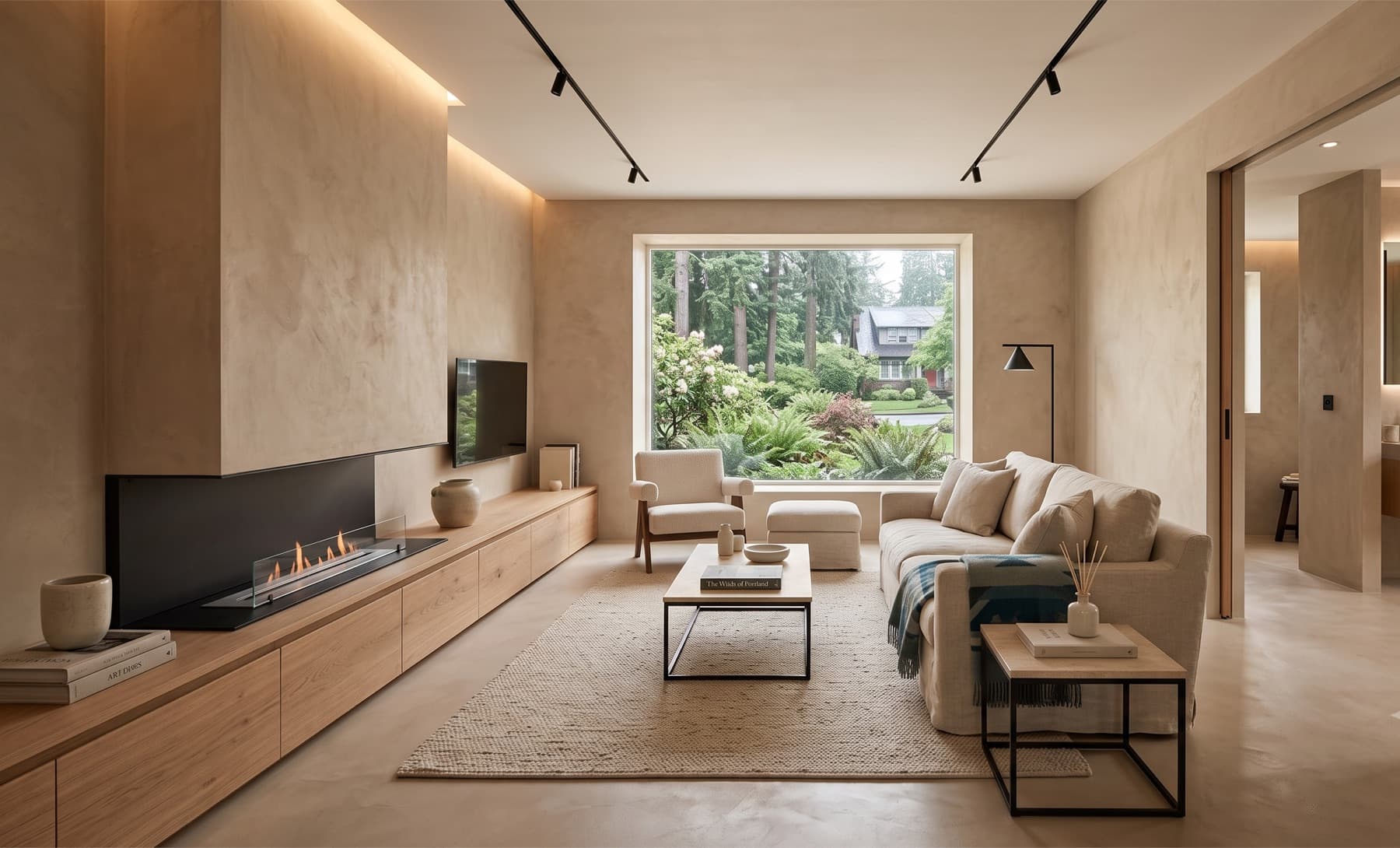
Lime
Breathes, heals, and ages into something better
Slaked lime and aggregate, built up in thin coats. Soft, luminous, and alive to light. The oldest of the four by a couple of thousand years.
Explore Lime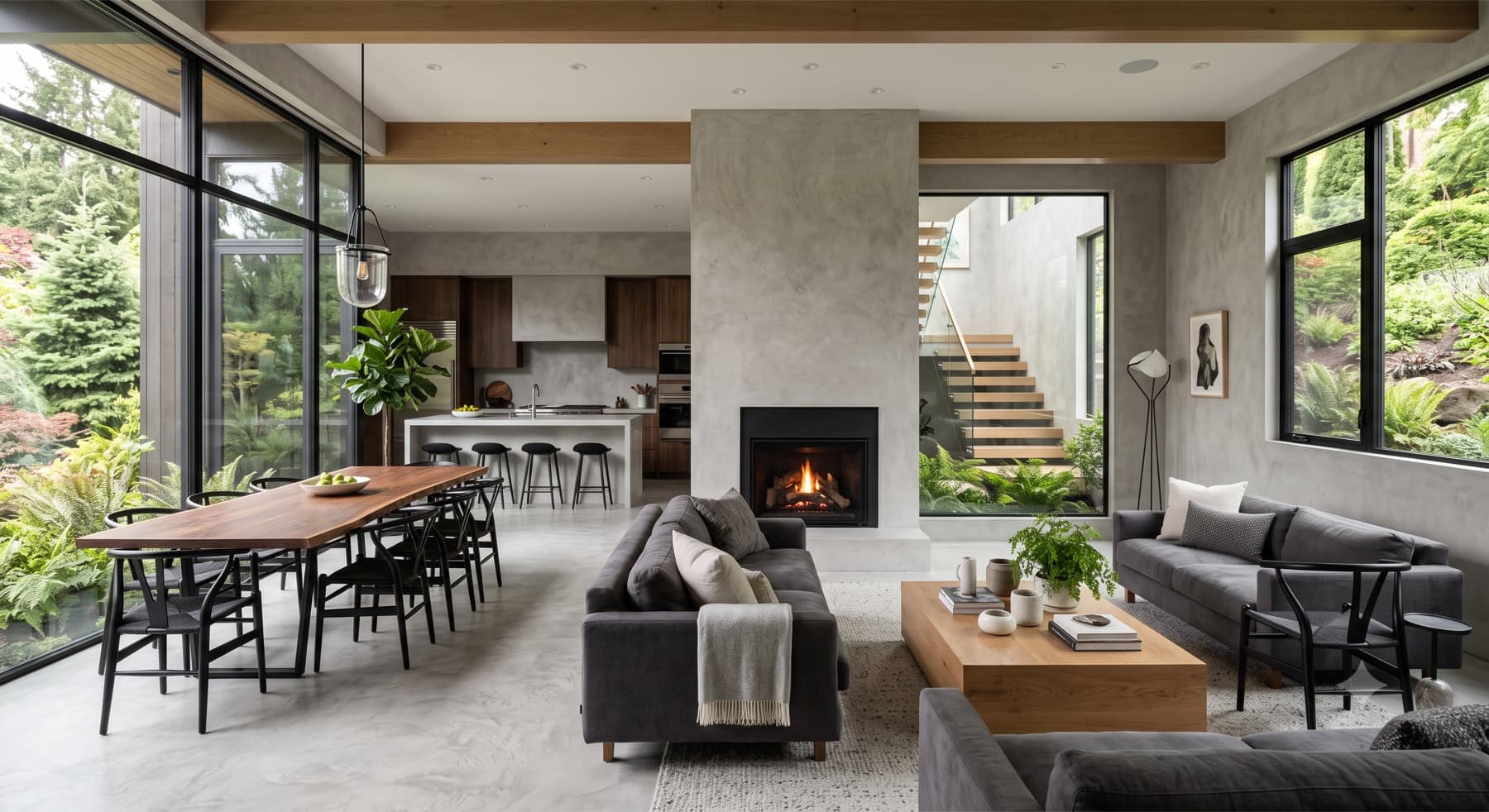
They are not interchangeable, and the difference is not decorative.
People usually arrive having already decided which finish they want, based on a photograph. That is a reasonable place to start and a poor place to finish, because the photograph does not tell you whether the material in it survives a kitchen, or whether it lets an old wall breathe.
Here is the honest version of each one.
Breathes, heals, and ages into something better
Slaked lime and aggregate, built up in thin coats. Soft, luminous, and alive to light. The oldest of the four by a couple of thousand years.
Explore Lime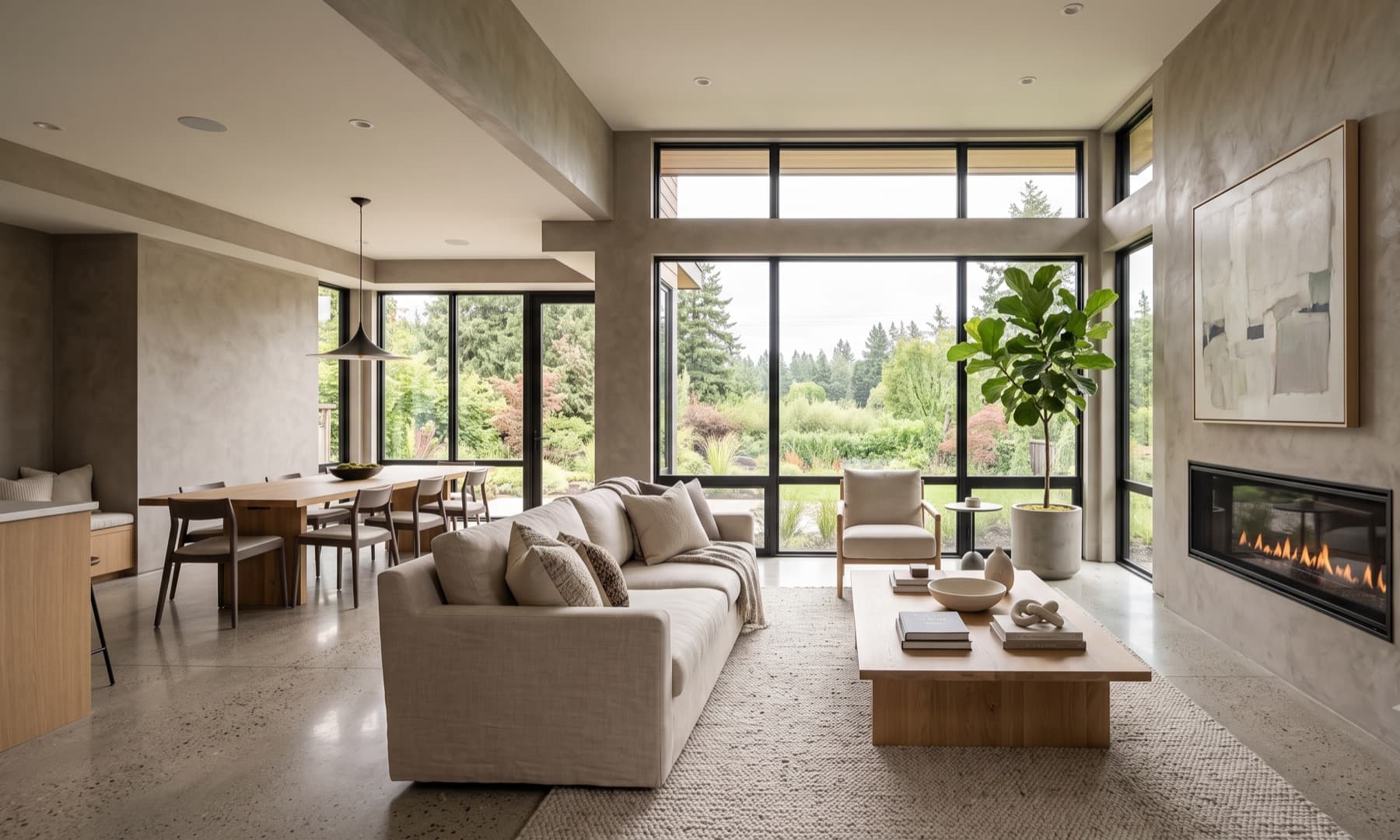
Hand troweled depth, no two walls alike
Natural clay and lime putty, laid on in overlapping passes. Every stroke stays visible. Made for the rooms you want people to notice.
Explore Roman ClaySeamless, waterproof, built for hard use
A thin cement composite that cures hard and continuous. No grout lines, no seams, nothing for mold to hold onto. The answer for bathrooms and kitchens.
Explore Microcement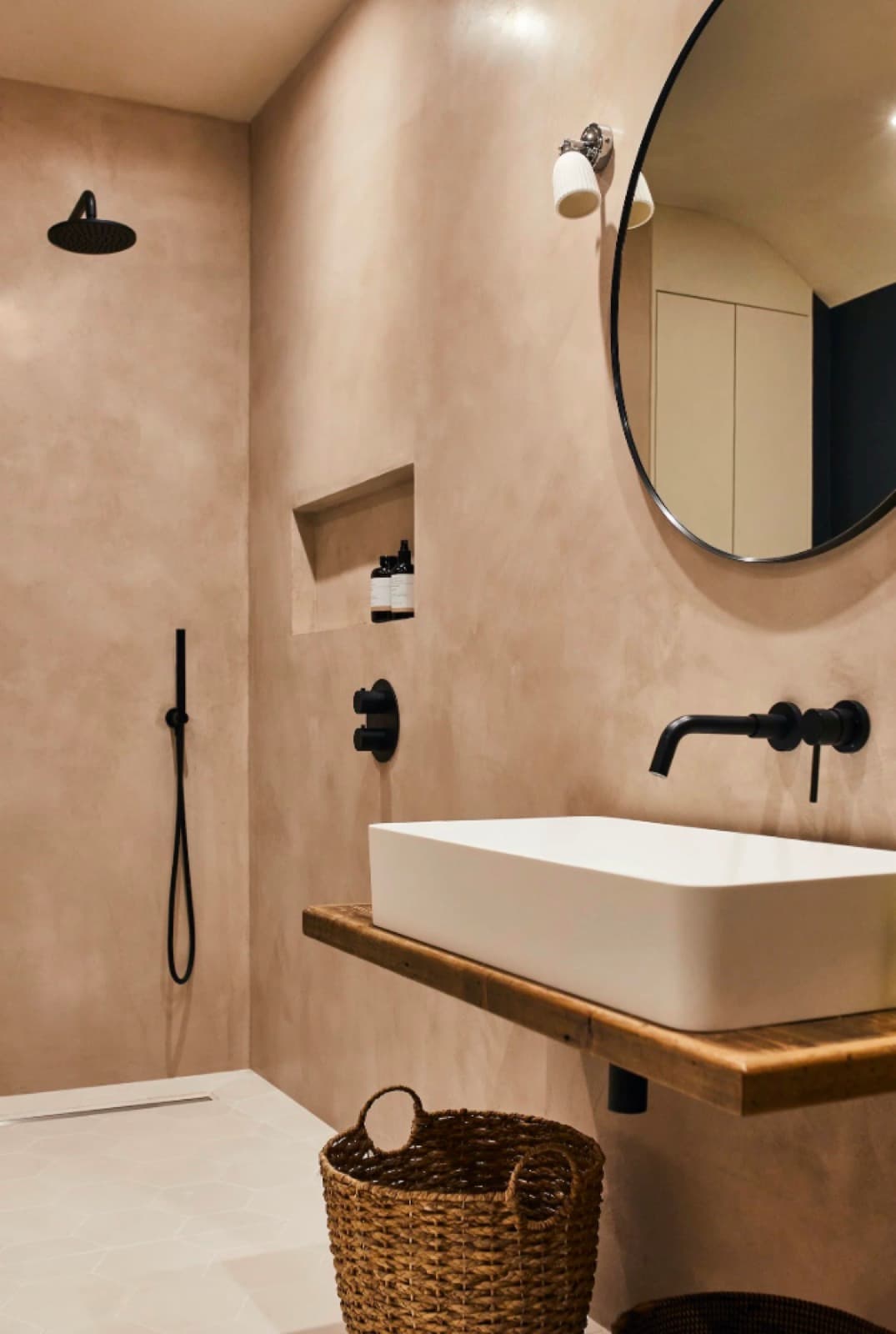
Burnished lime, sealed with soap, shaped without a single seam
Moroccan lime plaster, compressed with a stone and sealed with olive oil soap. Waterproof by chemistry rather than by coating. The finish that built the hammams.
Explore TadelaktShortcut
| If the room is… | Choose | Because |
|---|---|---|
| A bathroom, practically | Microcement | Seamless, water resistant, and no upkeep at all. |
| A bathroom you want to be beautiful | Tadelakt | Warmer and hand burnished. Costs more and wants re-soaping. |
| A shower or steam room | Tadelakt, or Microcement | Tadelakt was built for hammams. Microcement is the low maintenance route. |
| A basin, tub, or curved built-in | Tadelakt | The only one of the four that can be formed into shapes. |
| A kitchen | Microcement | Survives splash, heat, and real cleaning. |
| A living or dining room | Roman Clay | Most depth and presence where it gets looked at. |
| A bedroom | Roman Clay, or Lime | Warm and matte. Lime if the house is old. |
| A pre-war house with damp walls | Lime | The only one that lets the wall breathe. |
| A hallway with kids or dogs | Microcement | The others will show it. |
| A room you want to age visibly | Lime | It is the only one that will. |
A different budget entirely
Lime mixed into paint, rolled and brush-finished in several coats to build the movement of a hand-applied plaster. Not Roman clay and not tadelakt, and priced nothing like either of them.
Typically $3 to $5 per square foot installed.
That is the normal state of affairs, and it is what the consultation is for. We look at the room, show you samples on your own wall, and tell you which material actually belongs there.