The material
What it is
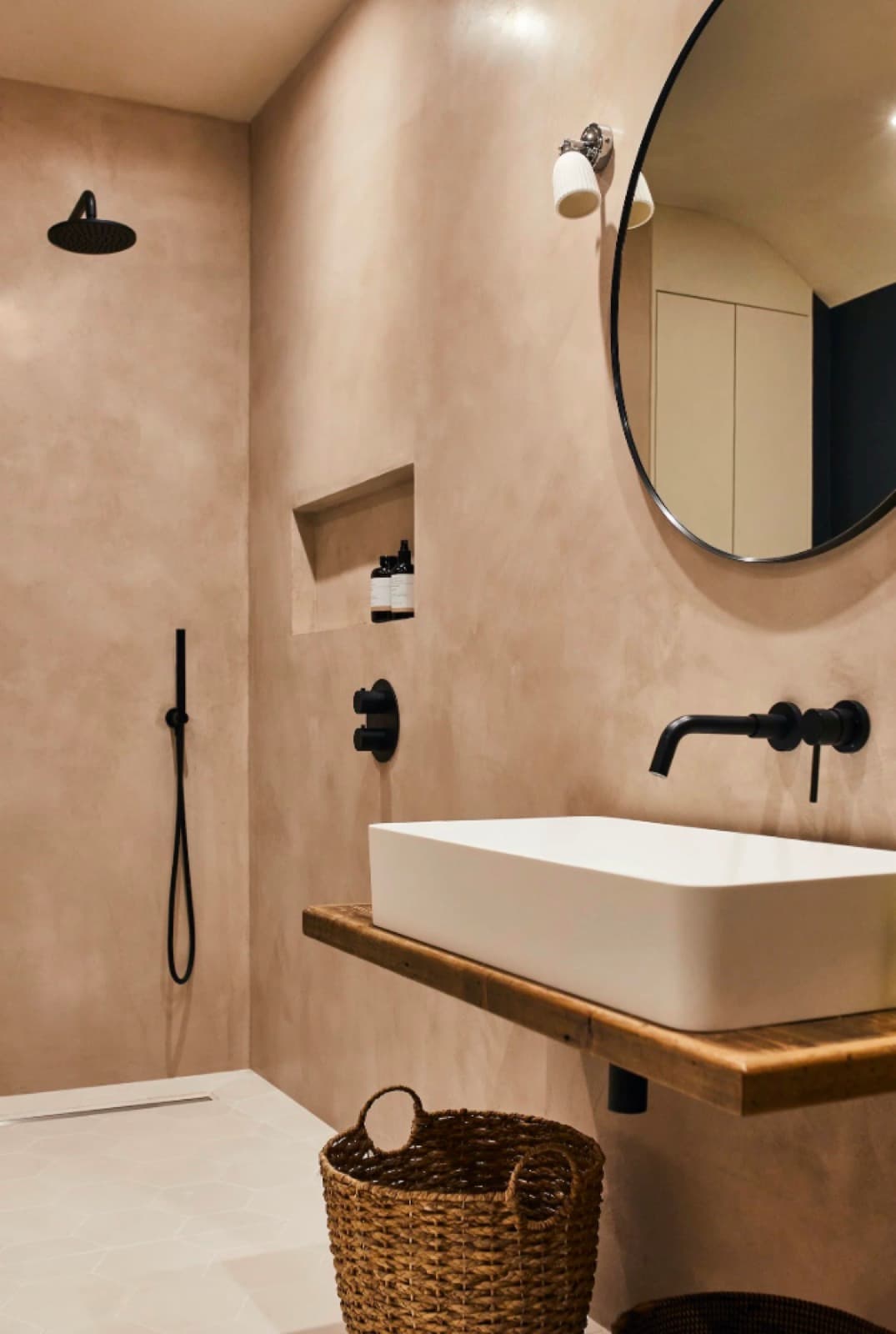
Tadelakt is Moroccan lime plaster, and the name is Arabic for "to rub in", which tells you most of what you need to know about how it is made. Lime is applied in layers, compressed hard with a smooth river stone until the surface densifies, then sealed with black olive oil soap.
That last step is the whole trick. The soap reacts with the high pH of the lime in a process called saponification, and the reaction leaves a natural water repellent wax inside the surface rather than a film sitting on top of it. Nothing is coating the wall. The wall itself became water resistant. It is the finish Moroccan bath houses have been built from for centuries, and steam rooms are a harder test than most bathrooms will ever give it.
Rooms
Where it belongs
Bathrooms and wet rooms
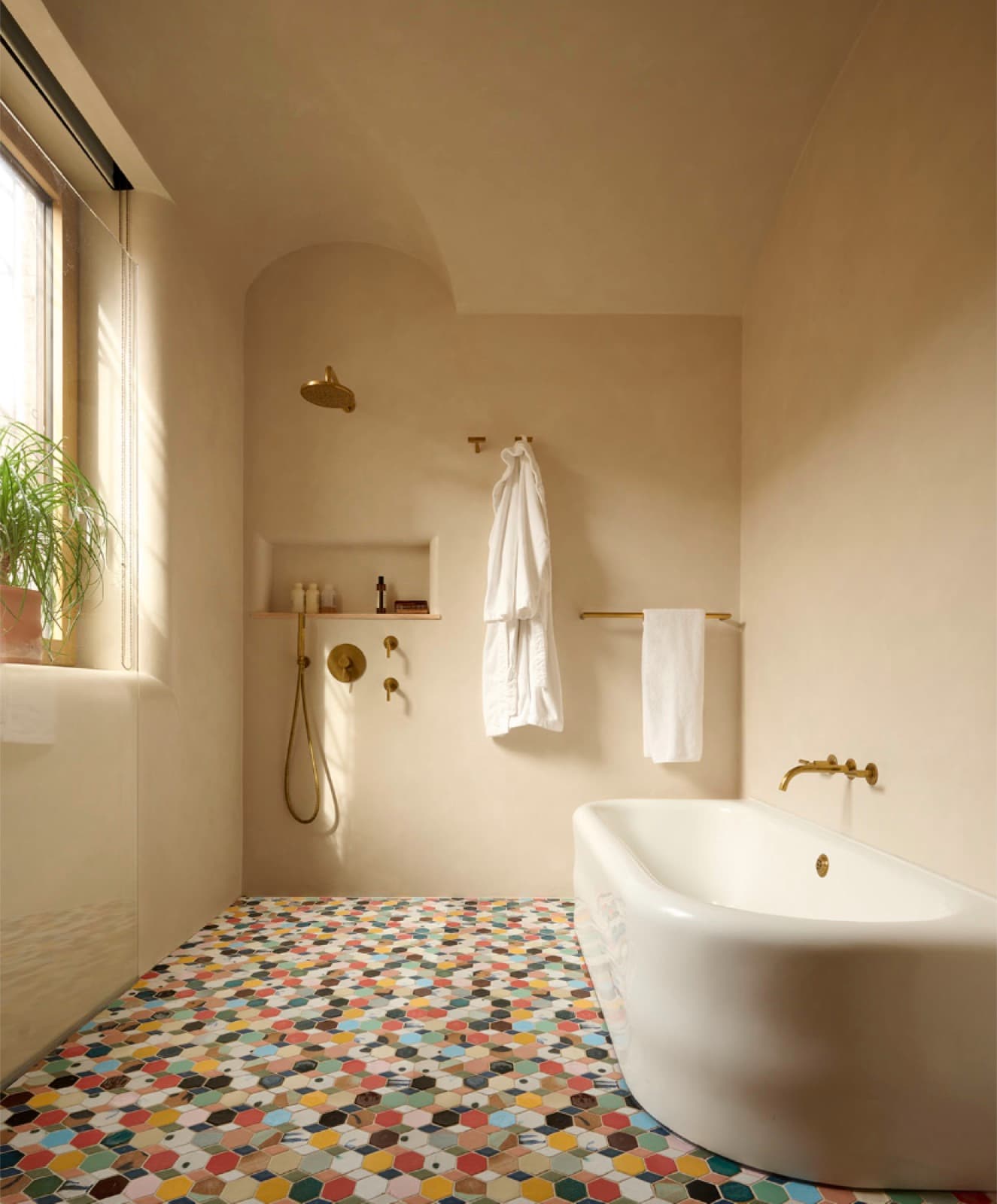
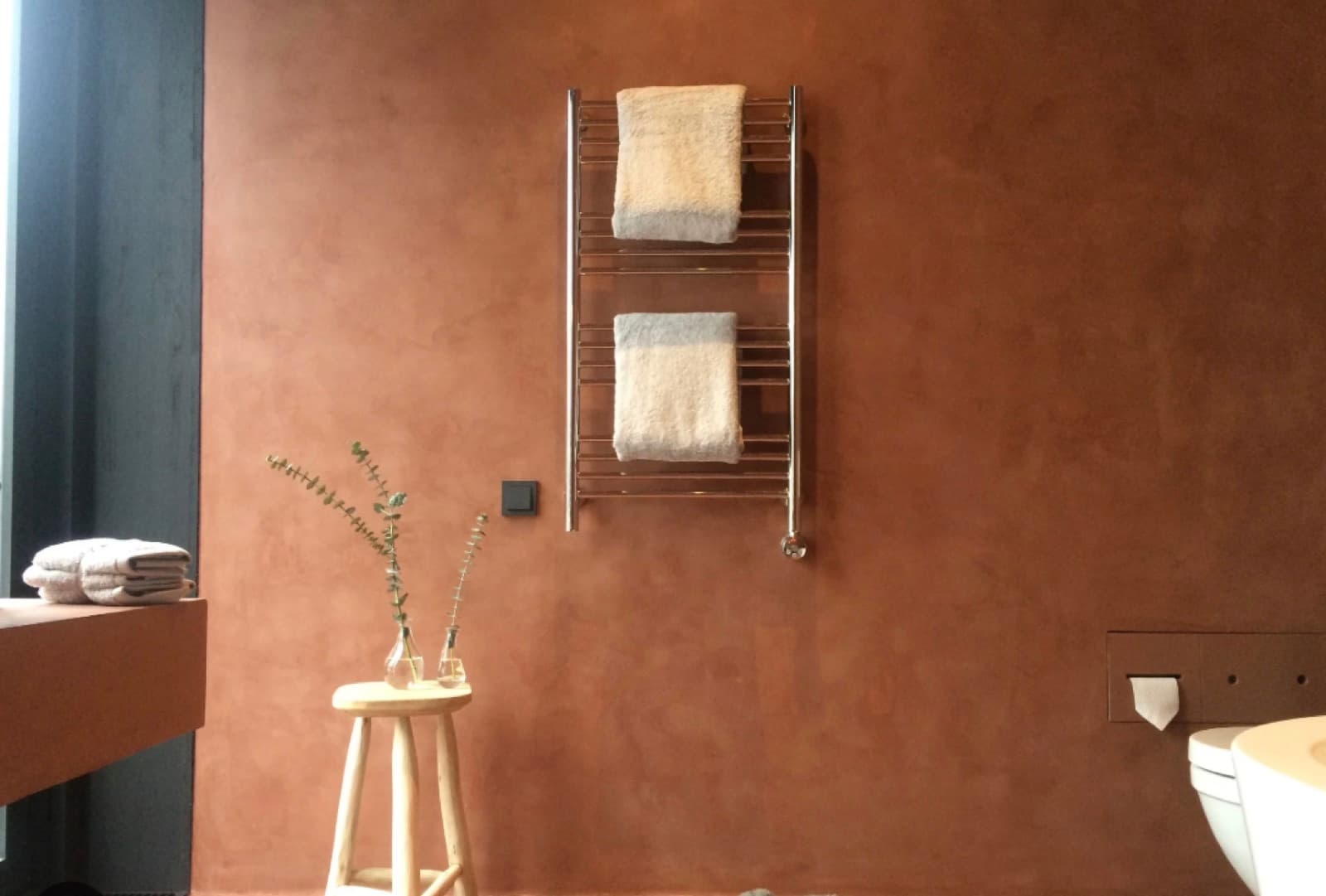
This is what tadelakt was invented for. It runs from wall to floor to bench without a single joint, so there is no grout, no silicone line, and nothing for mildew to colonize. It is also naturally hostile to mold because of the lime.
Showers and steam rooms
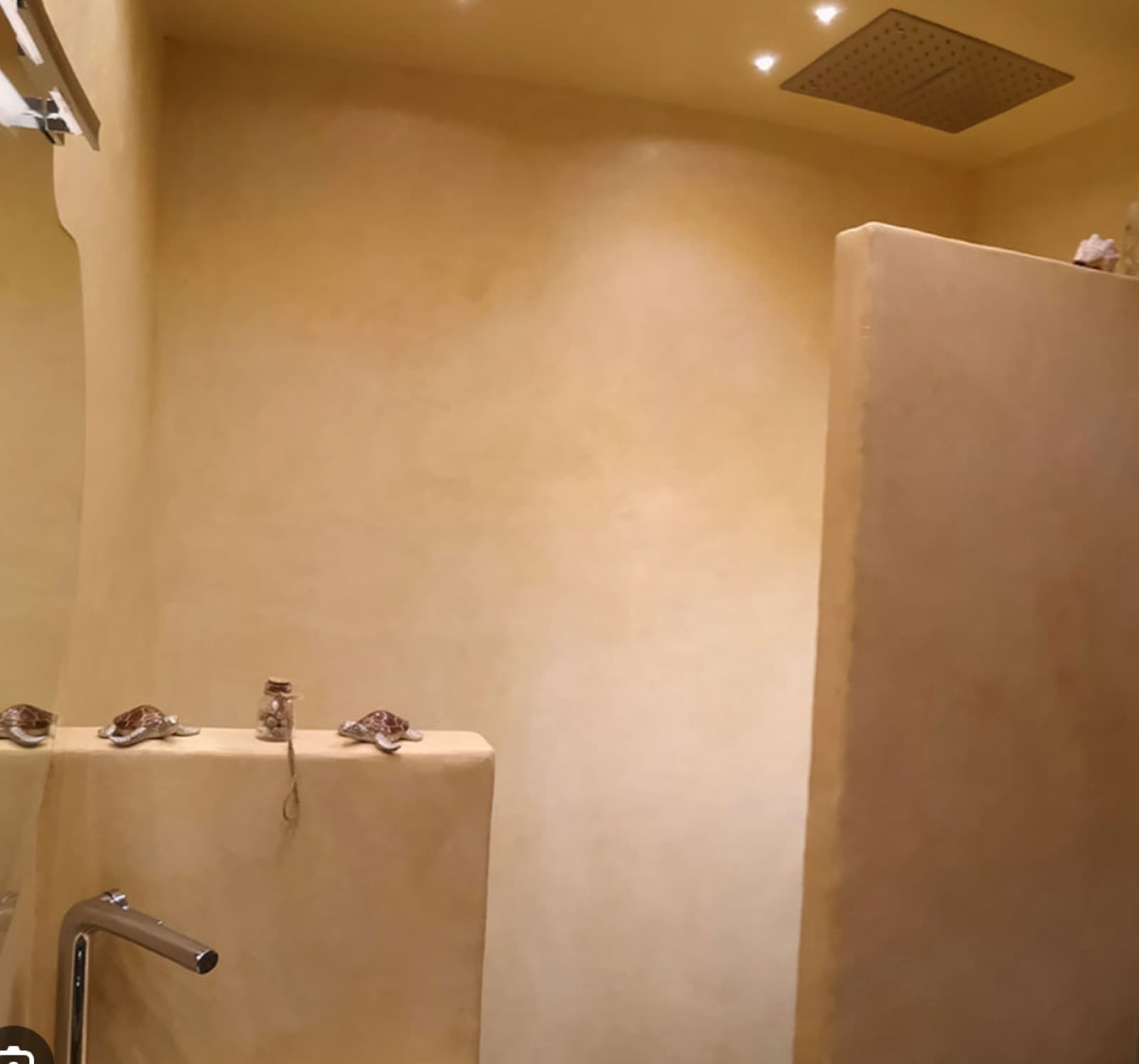
A properly burnished and soaped tadelakt shower is a genuine hammam surface. It wants correct detailing at the drain and the junctions and it wants re-soaping over the years, but it will take steam and splash for decades.
Basins, tubs, and benches
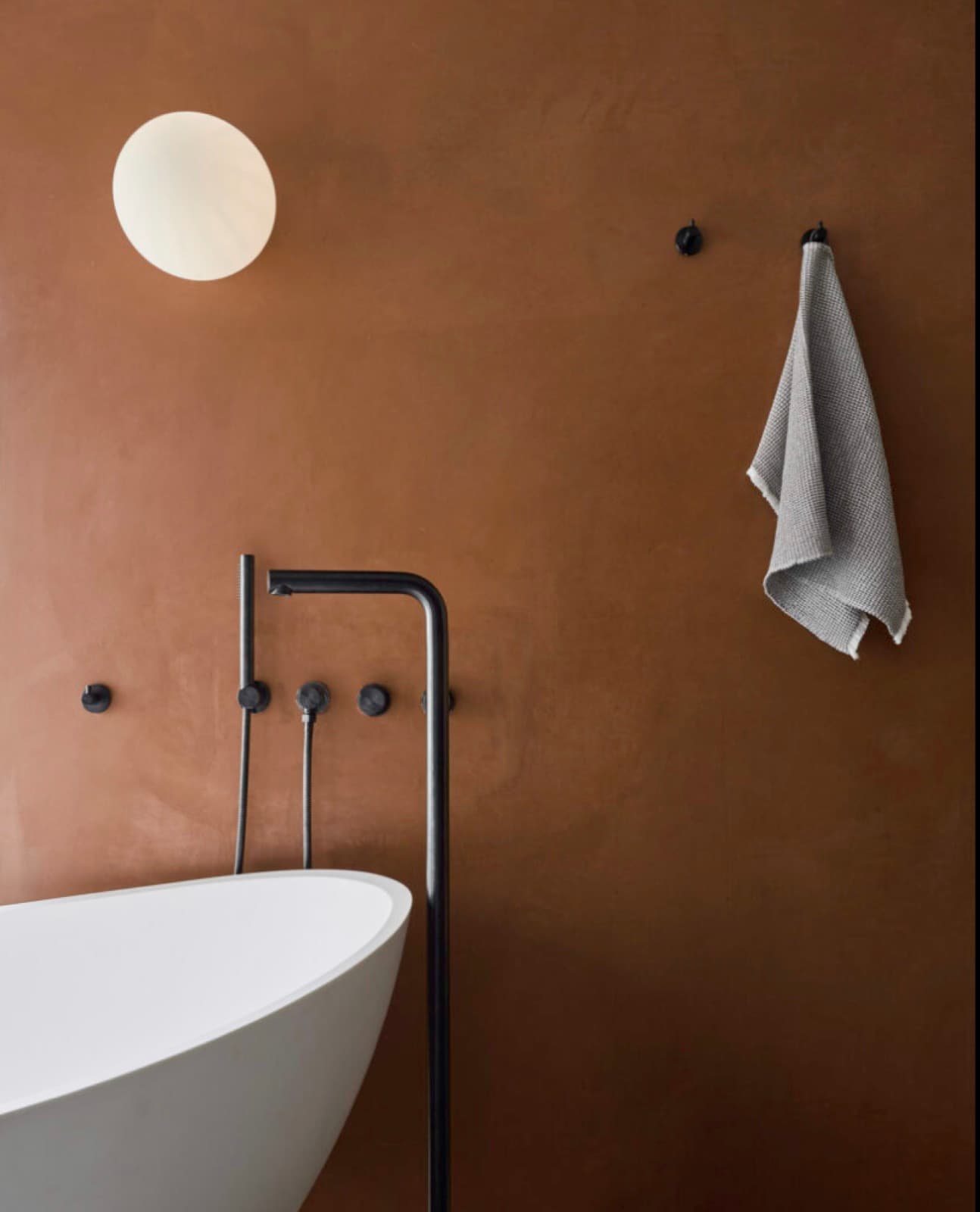
Because it goes on as a paste it can be formed over a shaped substrate, so a basin and its surround become one continuous object. This is the thing tadelakt does that no other finish we apply can do at all.
Curves, niches, and sculpted work
Rounded corners, arched niches, soft returns. Tadelakt has no grain and no panel, so geometry stops being a constraint. If you have been shown a photograph of a seamless sculpted bathroom, it was almost certainly this.
Straight answer
Where it doesn’t
Tadelakt is the most expensive and slowest finish we apply, by a clear margin, because most of the cost is a person compressing a wall with a stone. It also is not maintenance free. The soap seal wants renewing every few years in a shower, and acidic cleaners will etch it, so vinegar and limescale removers are out for the life of the surface. It is softer than microcement and it will take a chip from a dropped bottle. If you want a wet room you never think about again, microcement is the honest answer. Choose tadelakt because you want the surface it makes, not because you want the easiest one.
What it costs
$35 to $65per sq ft, installed
Ranges cover material and labor for typical residential work. The existing condition of the wall moves the number more than anything else, which is why we quote after seeing it rather than over the phone.
Want this look for less?
The look of hand-troweled depth, at a paint-line price. It is paint, not plaster, and we will tell you plainly what that trades away.
Typically $3 to $5 per square foot installed.
Our palette
Colors
Tadelakt takes mineral pigment into the lime itself, so the color is the material rather than a layer on it. The traditional palette runs warm and earthen, and it deepens slightly as the soap cures.
Plaster
Bare, unpigmented lime
Clay Pink
Warm Marrakech blush
Sand
Soft desert neutral
Saffron
Deep golden ochre
Rose Clay
Dusty earthen rose
Olive
Muted green gray
Rif Blue
Faded coastal blue
Cocoa
Rich warm brown
2 to 4 weeks on site
What installation involves
Layers of lime go on over a prepared substrate, then the real work starts. The surface is compressed and burnished with a stone, by hand, until it takes on a low sheen. That step cannot be rushed or mechanized, and it is the reason tadelakt costs what it does.
Once it has cured enough, black soap is worked in and polished back. The saponification reaction develops over the following days, and the surface keeps hardening for weeks after we leave.
Aftercare
Living with it
- Clean with pH neutral soap and water. Nothing acidic, ever, so no vinegar and no limescale removers.
- No abrasive pads and no bleach.
- Re-soap a shower every few years to top the seal back up. We will show you how, or we will come and do it.
- Squeegee a shower after use and it will look better for longer, the same as any surface.
Questions
About tadelakt
Is tadelakt really waterproof?
Water resistant is the honest phrase, and it earns it through the soap and lime reaction rather than a sealer film. Moroccan hammams have been built from it for centuries. What makes or breaks a tadelakt shower is the detailing at drains and junctions and the substrate underneath, which is where we spend the attention.
How is it different from microcement in a bathroom?
Microcement is engineered, harder, faster to install, cheaper, and needs no upkeep. Tadelakt is hand burnished, softer, warmer, can be sculpted into curves and basins, and needs re-soaping. Microcement is the practical answer. Tadelakt is the one people fall in love with. Both are correct depending on which of those you want.
Why does it cost more than the others?
Because it is hours of hand compression with a stone, and there is no way to shorten that without losing the thing you are paying for. It is the most labor intensive finish we offer.
Can it go on a bathroom floor?
On a wet room floor yes, with the right substrate and fall to the drain. In a heavy traffic area we will usually steer you elsewhere, because it is softer than microcement and shows wear sooner underfoot.
Considering tadelakt?
We will look at the wall, show you samples in your own light, and tell you honestly whether this is the right material for the room.