The material
What it is
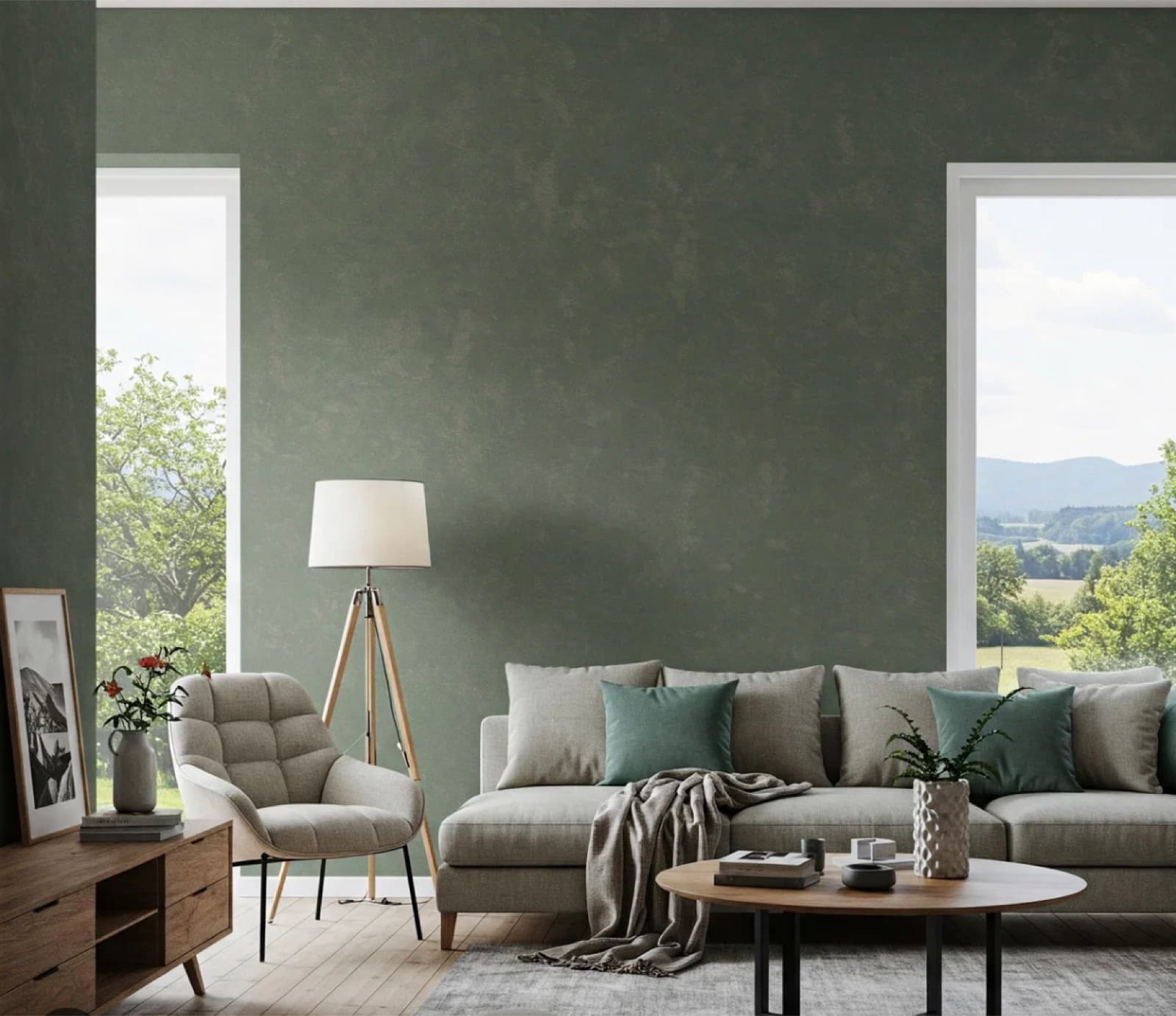
Lime paint is exactly what it sounds like: lime worked into a paint base, then applied in several coats with a roller and finished by brush to break up the surface and build depth. It is not troweled by hand the way Roman clay or tadelakt are, and it does not go on anywhere near as thick, but multiple coats with a varied brush finish get genuinely close to that look from normal viewing distance.
Because the base is lime rather than a fully synthetic paint, it keeps some of the character of the real thing: a slightly chalky, mineral surface rather than a flat plastic sheen, and better resistance to mold than an ordinary acrylic paint.
Rooms
Where it belongs
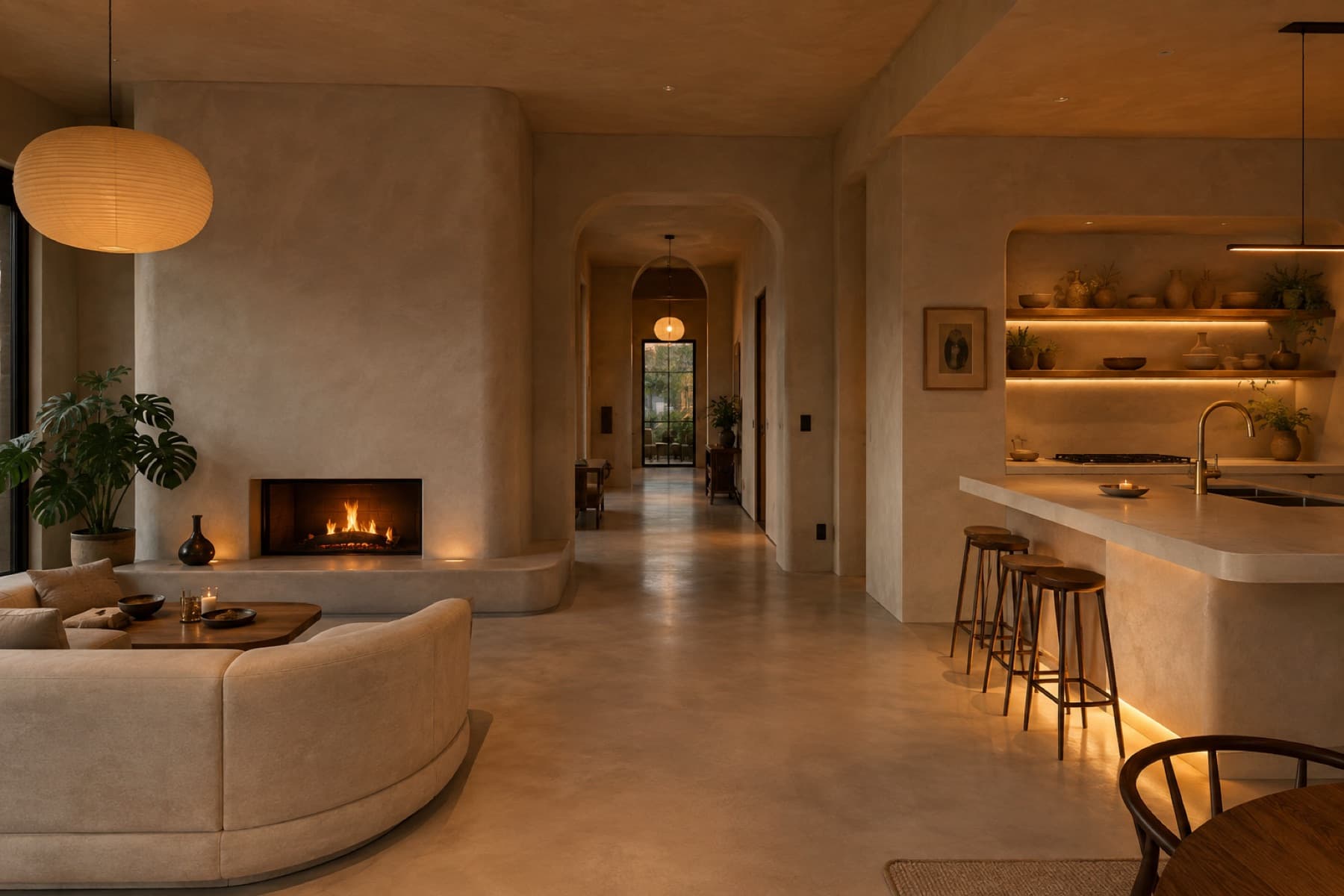
A large accent wall on a tighter budget
The room where full Roman clay is exactly what you want, but the square footage or the budget does not stretch to a hand-troweled system. Lime paint gets close to that depth for a fraction of the cost and a fraction of the time on site.
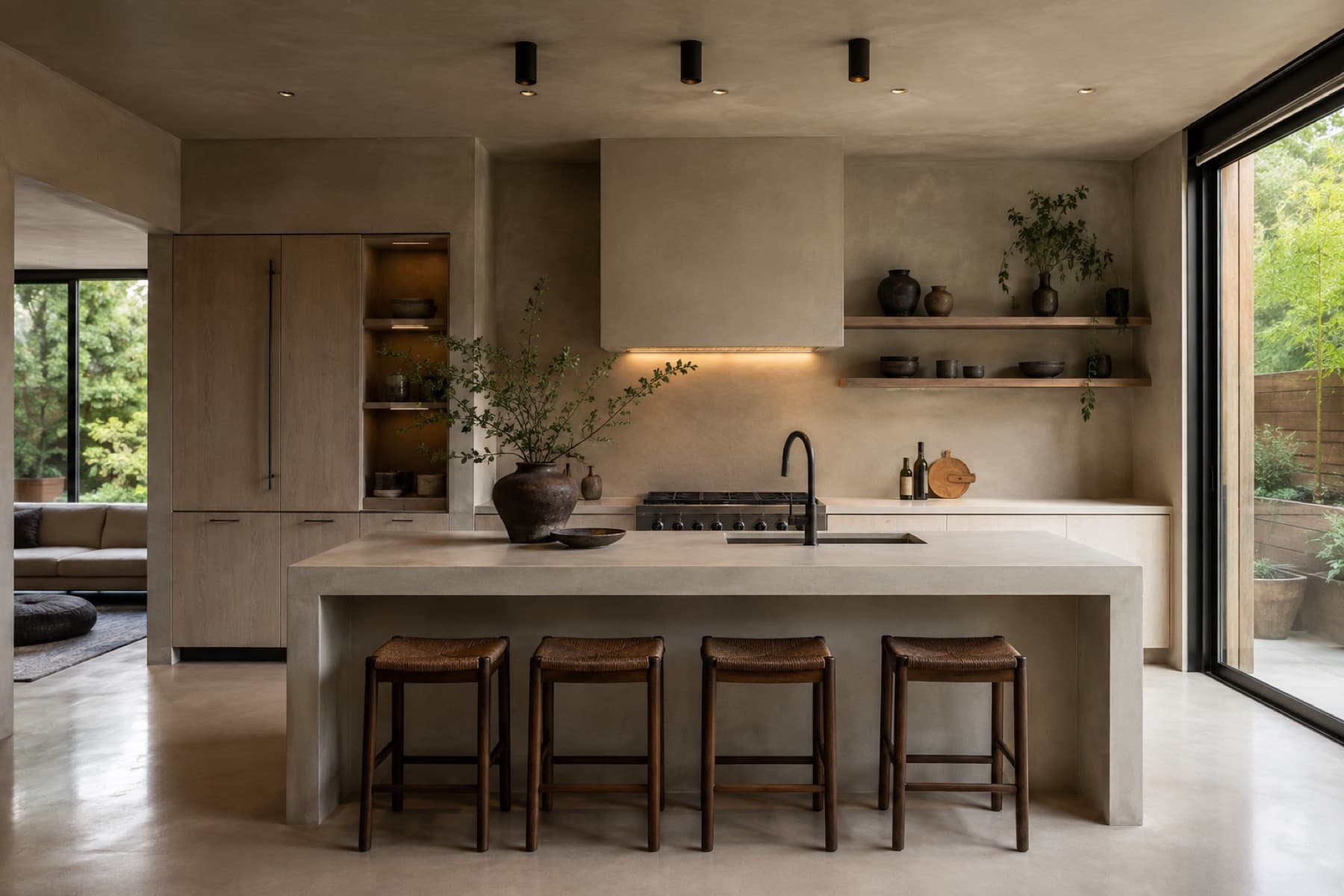
Rentals and flips
Where the finish needs to look considered in photographs and hold up for a normal paint cycle, not decades. It reads well in listing photos, which is usually the actual goal.
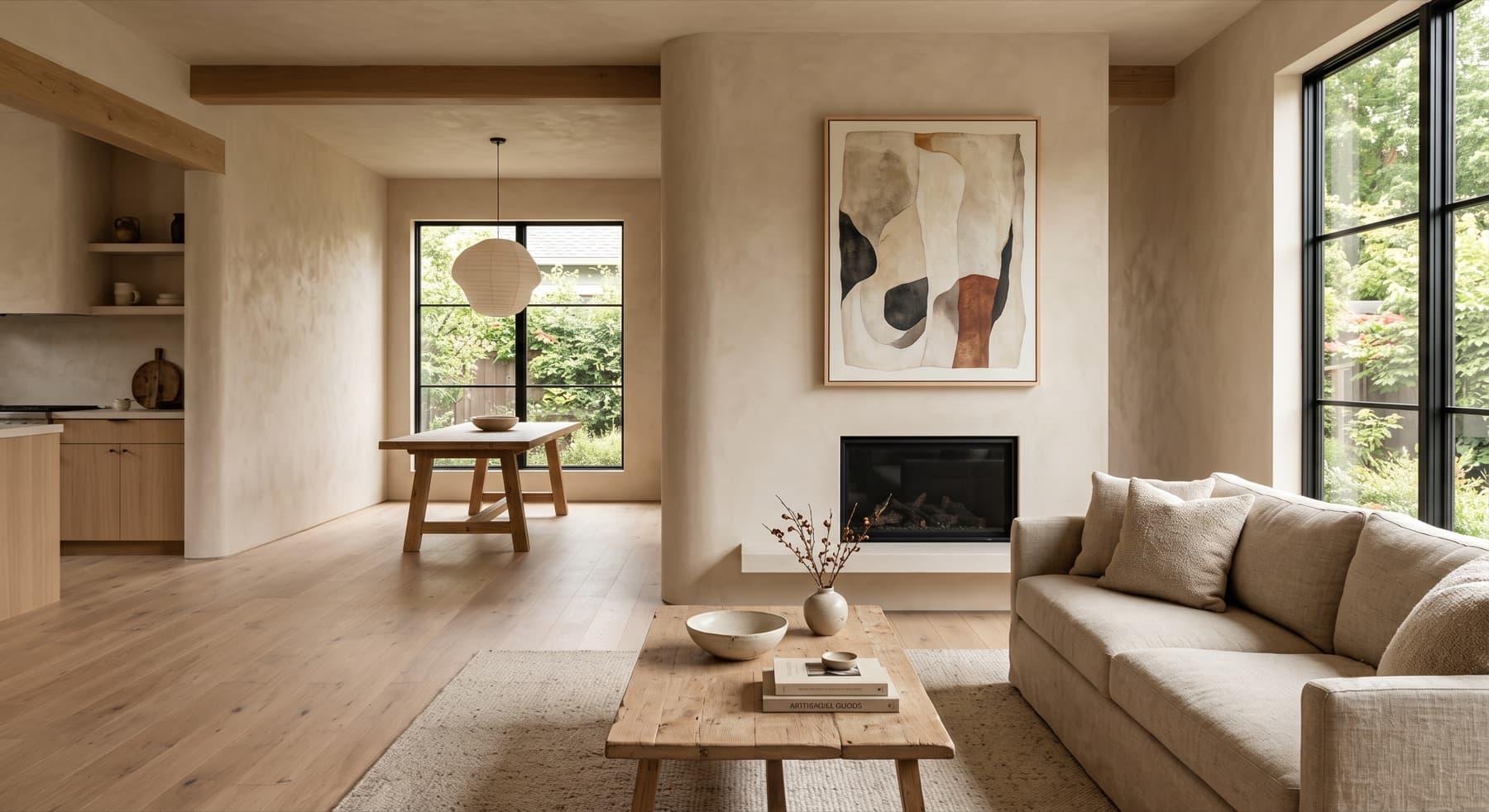
Ceilings and ancillary rooms
Places where the full plaster experience is not the point, but a flat white ceiling feels like a missed opportunity. Lime paint dresses these rooms up without the cost of treating every surface as a feature.
Straight answer
Where it doesn’t
This is paint, and it behaves like paint. It does not self-heal the way real lime plaster does, it will not develop the same patina over decades, and its lifespan before it wants a fresh coat is closer to a normal paint cycle than to plaster. Up close and in raking light, the depth reads thinner than a hand-troweled finish, because it genuinely is thinner. If you want the real material and the real longevity, that is Roman clay or tadelakt, and we will say so plainly if you ask us to compare them on your wall.
What it costs
$3 to $5per sq ft, installed
Ranges cover material and labor for typical residential work. The existing condition of the wall moves the number more than anything else, which is why we quote after seeing it rather than over the phone.
Our palette
Colors
Lime paint is mixed to match any color in our Roman clay or tadelakt palettes, so you can sample the look before deciding whether to go further with the real material.
Chalk
Soft mineral white
Sand
Warm neutral
Clay
Dusty terracotta
Stone
Muted warm gray
Umber
Deep warm brown
2 to 4 days on site
What installation involves
Two to four coats rolled on and finished by brush while each coat is still workable, which is what builds the texture. There is no long cure window between coats the way there is with real plaster, so this moves fast.
Surface prep is the same as any paint job done properly: clean, sound, and primed if the wall calls for it. Far less demanding than the substrate work a full plaster system needs.
Aftercare
Living with it
- Dust or wipe with a soft, barely damp cloth.
- Treat it like a good paint finish, because that is what it is. Avoid scrubbing and harsh cleaners.
- Touch-ups are straightforward with leftover material, more forgiving than patching real plaster.
- Expect to refresh it on a normal paint timeline rather than measuring its life in decades.
Questions
About lime paint
Is this the same as Roman clay or tadelakt?
No, and we would rather tell you that up front than have you find out later. Those are hand-troweled plaster systems with real depth, breathability, and, for tadelakt, genuine waterproofing. Lime paint approximates the look with rolled and brushed coats. It is a different product at a different price for a reason.
Why is it so much less expensive?
Because it is paint applied over a few days rather than plaster built up and cured over one to three weeks. Less material, less labor, less skill-hours per square foot. That is the honest trade for the honest price.
Can it go in a bathroom or kitchen?
We would steer you toward microcement or tadelakt for anything that gets wet. Lime paint is a dry-wall finish, same as Roman clay, and it does not want direct splash or standing steam.
Can I upgrade to real plaster later?
Yes. Lime paint does not lock you out of Roman clay or tadelakt down the line. It comes off, or in some cases gets plastered over directly, and we can walk you through which applies to your wall when the time comes.
Considering lime paint?
We will look at the wall, show you samples in your own light, and tell you honestly whether this is the right material for the room.