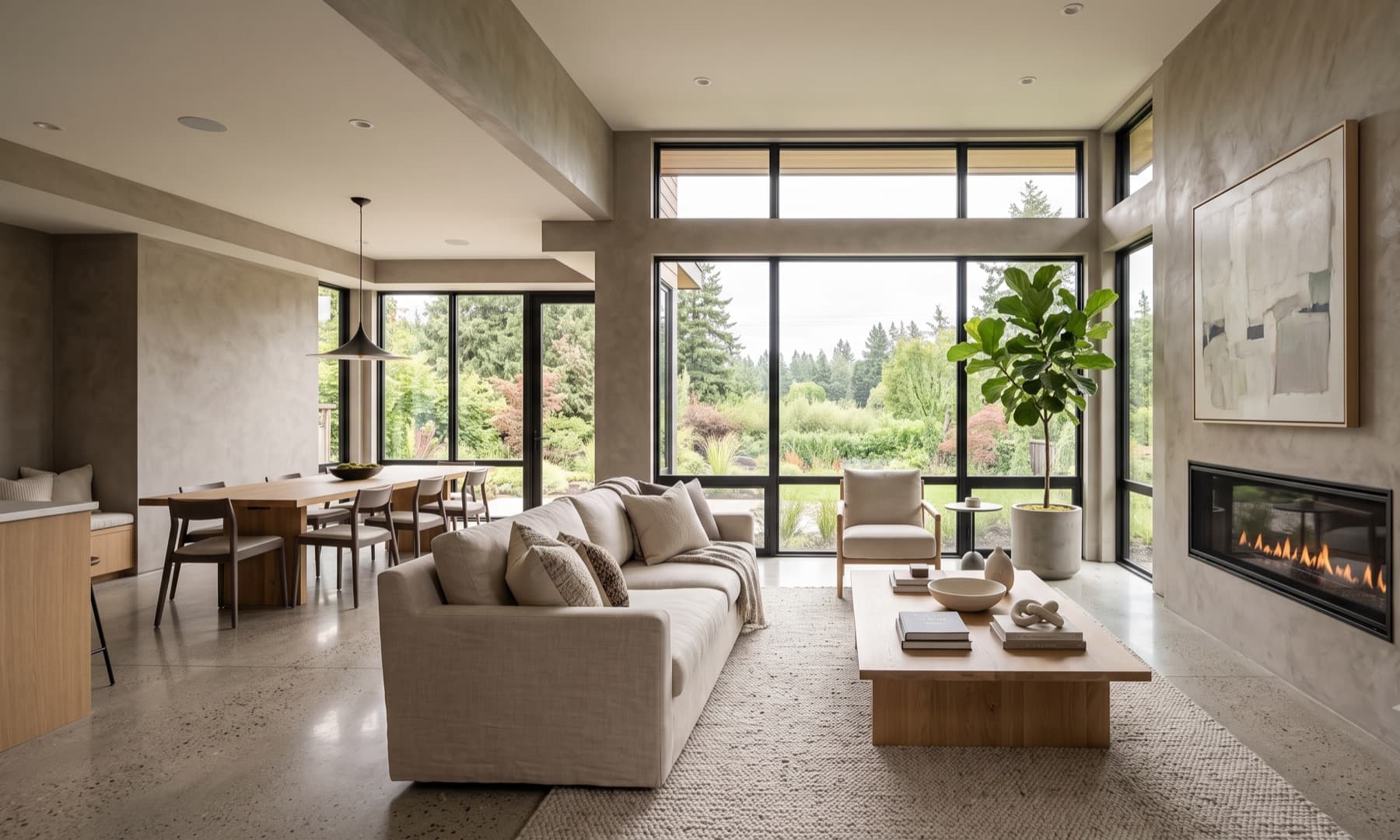
The material
What it is
Natural clay blended with lime putty and mineral pigment, applied in thin overlapping passes with a blade. Those overlaps are the whole point. Each pass leaves an edge, and the edges build into a surface with real movement and depth. It sits between paint and plaster in thickness, and well above both in presence.
Because it goes on by hand, no two walls come out the same, and one color reads differently in two rooms of the same house. That is a feature. It is also worth being sure you want it.
Rooms
Where it belongs
Living and dining rooms
This is the finish that most rewards being looked at. On a feature wall it changes the whole register of a room, and people notice without quite being able to say why.
Bedrooms
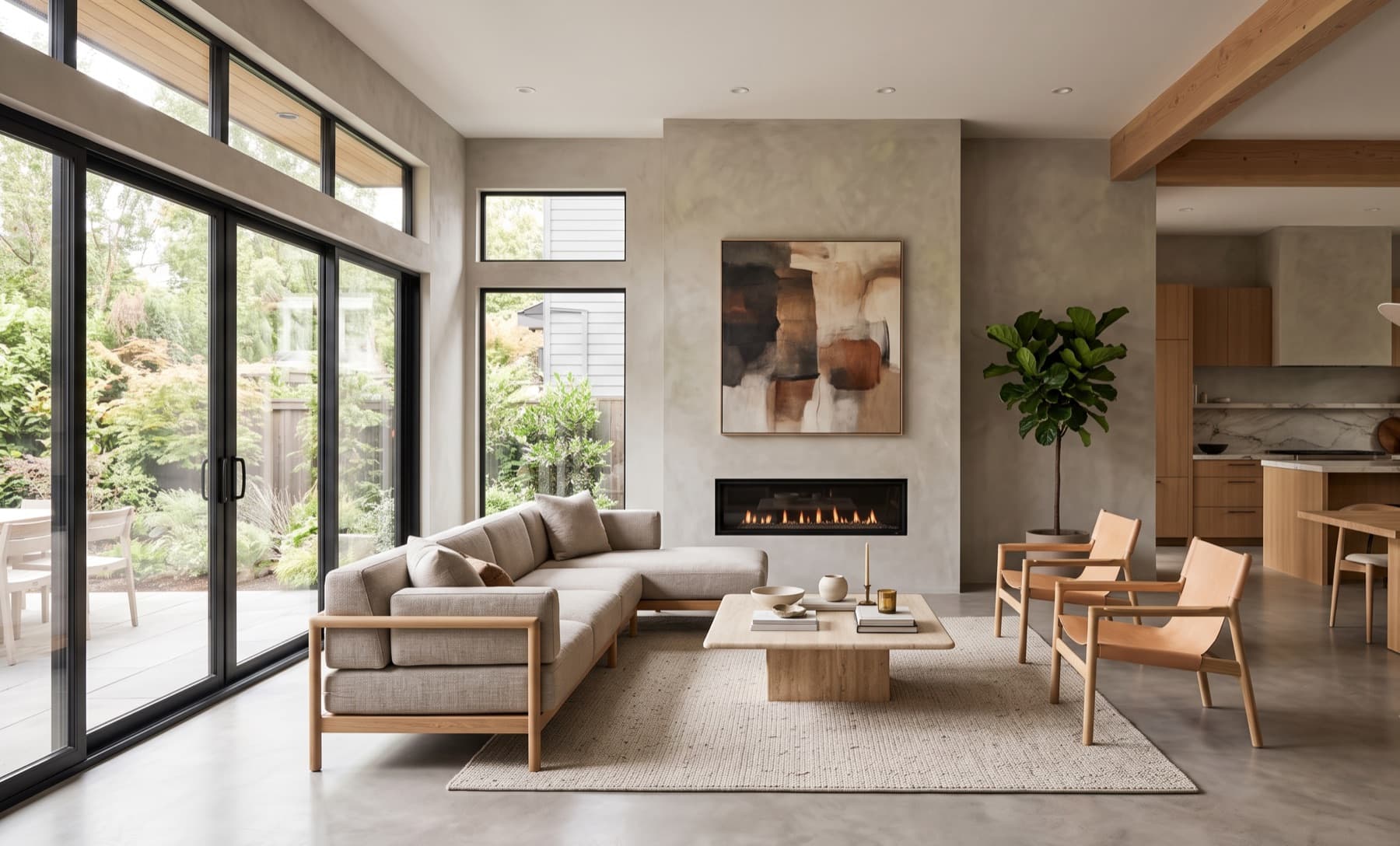
Warm, matte, and faintly sound absorbing. Rooms come out calmer. It is the finish people reach out and touch without thinking about it.
Studies and offices
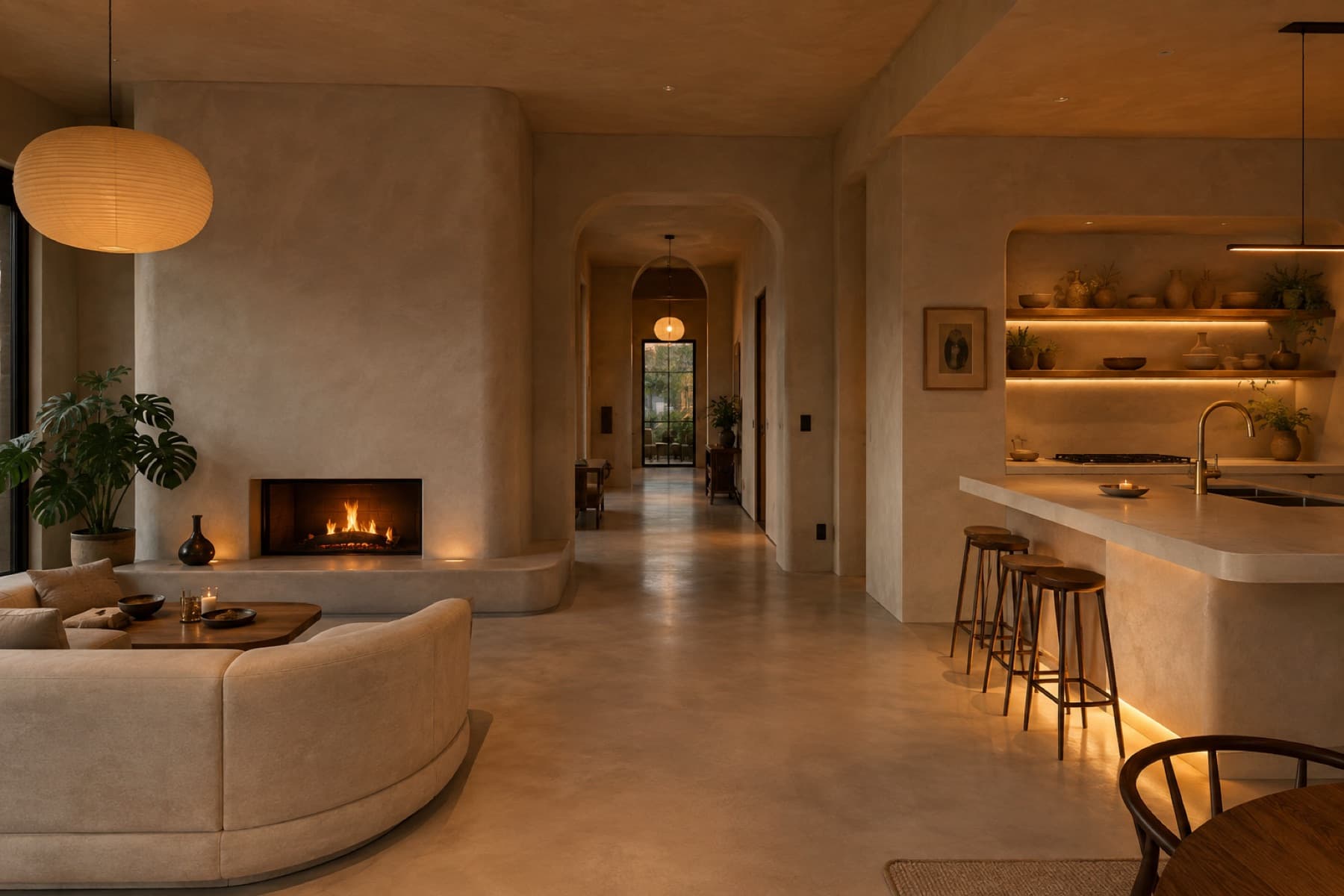
For a room you sit in eight hours a day, the difference between clay and flat paint is not a small one.
Hospitality and retail interiors
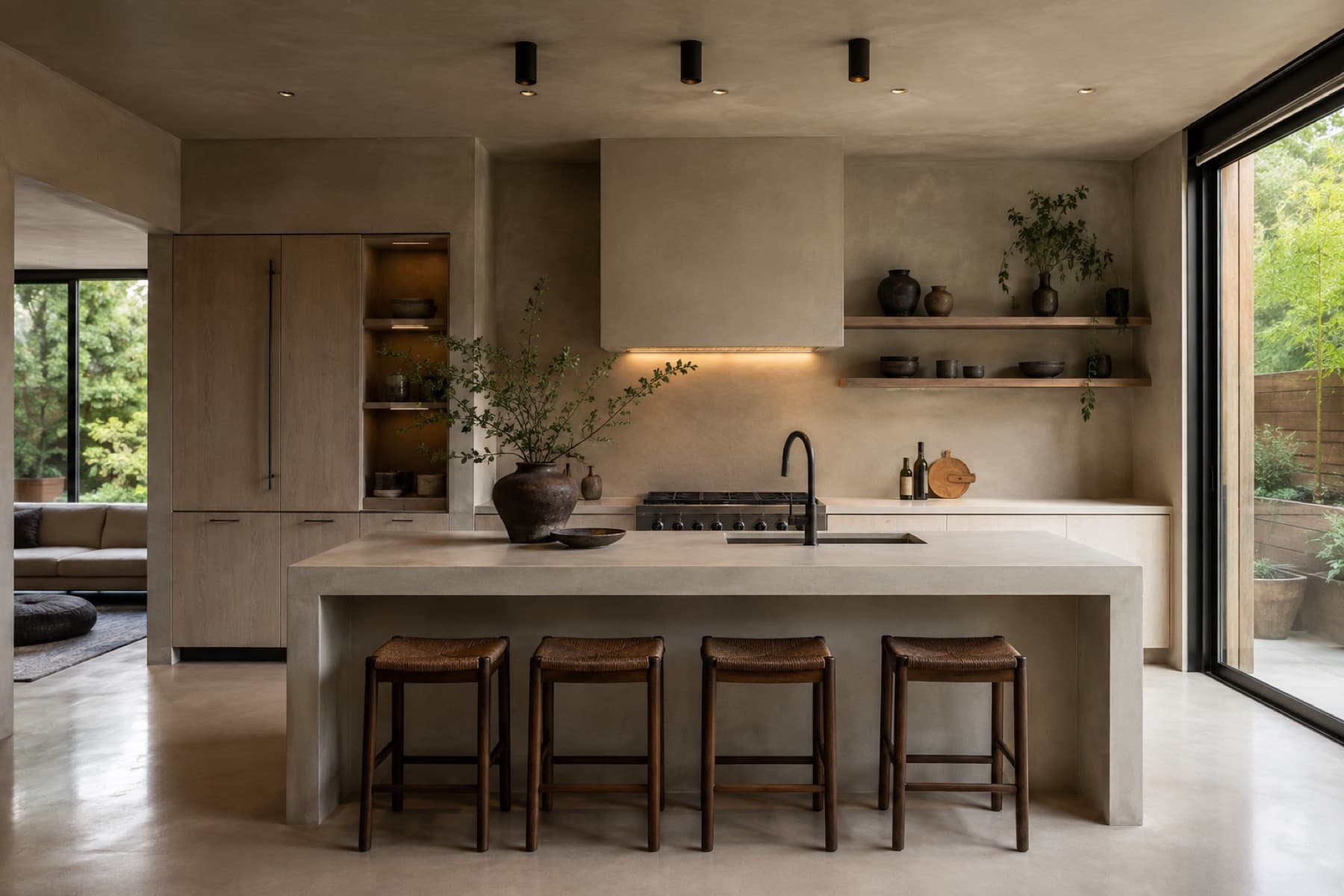
It reads as considered rather than decorated. People slow down in rooms finished this way.
Straight answer
Where it doesn’t
This is not a kitchen finish and not a bathroom finish. It handles scuffs better than flat paint, but it was not built for standing steam, direct splash, or heat cycling. Sealing helps in a hallway or a busy family room, and we will recommend it where it earns its keep. Sealing a room that fundamentally wants microcement is solving the wrong problem.
What it costs
$10 to $18per sq ft, installed
Ranges cover material and labor for typical residential work. The existing condition of the wall moves the number more than anything else, which is why we quote after seeing it rather than over the phone.
Want this look for less?
The look of hand-troweled depth, at a paint-line price. It is paint, not plaster, and we will tell you plainly what that trades away.
Typically $3 to $5 per square foot installed.
Our palette
Colors
Our clay colors are mixed in house from mineral pigment. Depth changes with how the material is laid, so we always sample on your wall first. The same color is a different thing in north light and south light.
Linen
Neutral warm white
Dove
Soft cool gray
Amber
Warm golden brown
Sage
Muted green
Rust
Vintage terracotta
Slate
Deep cool gray
Mushroom
Grayed warm brown
Indigo
Deep, considered blue
Charcoal
Near black, dramatic
1 to 3 weeks on site
What installation involves
Three to four passes by hand, each of them thin. This is the finish where the applicator matters most, and the one where poor work shows first. The movement either looks intentional or it looks like a mistake, and there is not much room in between.
Usable inside about a week, fully hard over roughly two.
Aftercare
Living with it
- Dust, and a barely damp cloth when it needs one.
- If we sealed it, you can clean with more confidence.
- Small damage is genuinely repairable. New material blends into old.
- Avoid hanging anything that will rub the same spot over and over.
Questions
About roman clay
How is this different from Venetian plaster?
Venetian plaster gets burnished to a hard polished sheen. Roman clay stays matte and keeps the trowel movement visible. Different material, different look, different room.
Can it go on a ceiling?
Yes, and it looks excellent up there. It is slower to apply overhead, which shows up in the quote.
Should I seal it?
In a hallway, a family room, or anywhere it gets touched daily, yes. In a bedroom or a formal dining room, usually not. We will tell you which case you are in.
Considering roman clay?
We will look at the wall, show you samples in your own light, and tell you honestly whether this is the right material for the room.